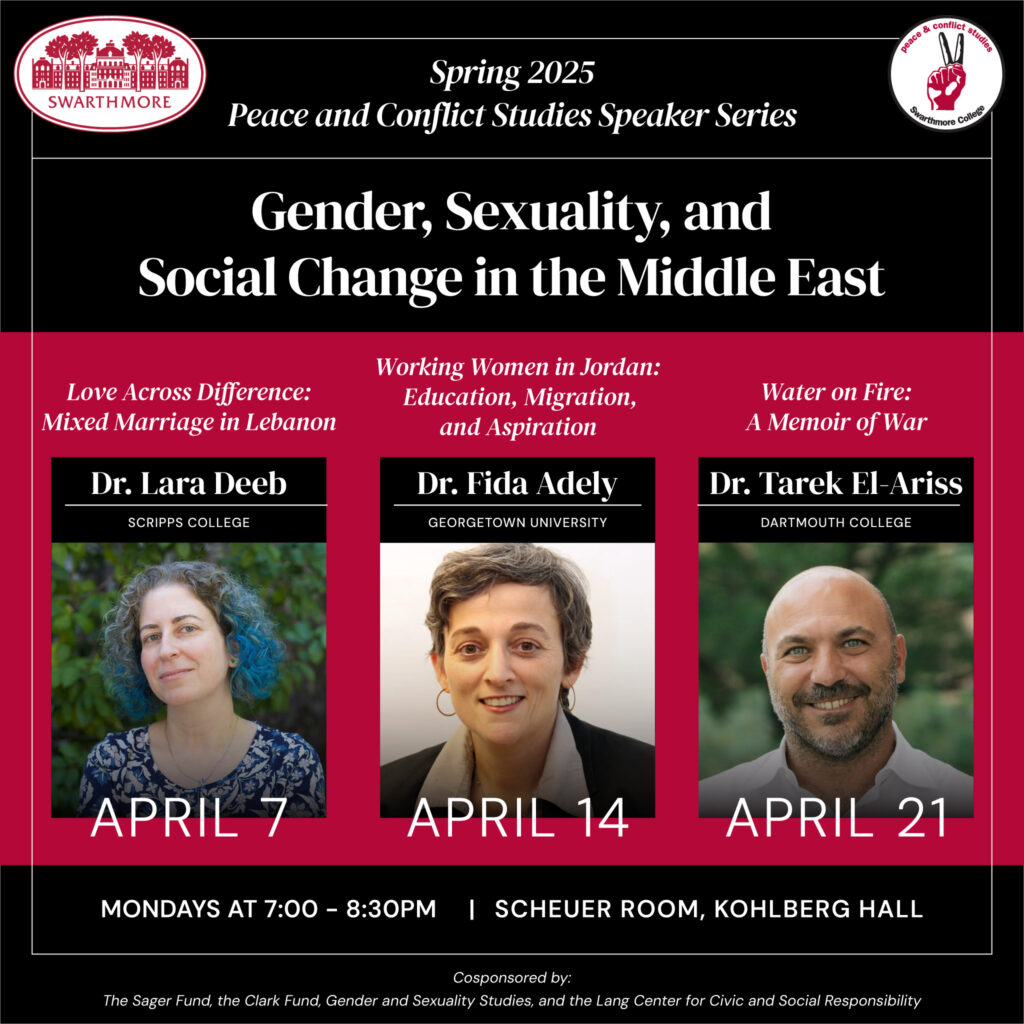
This spring’s PCS speaker series explores the crossroads of gender, sexuality, and social change in the Middle East. Join us in the Scheuer Room every Monday from 7-8.30pm from April 7 to April 21 for a series of book talks from three incredible scholars.
APRIL 7
Love Across Difference: Mixed Marriage in Lebanon
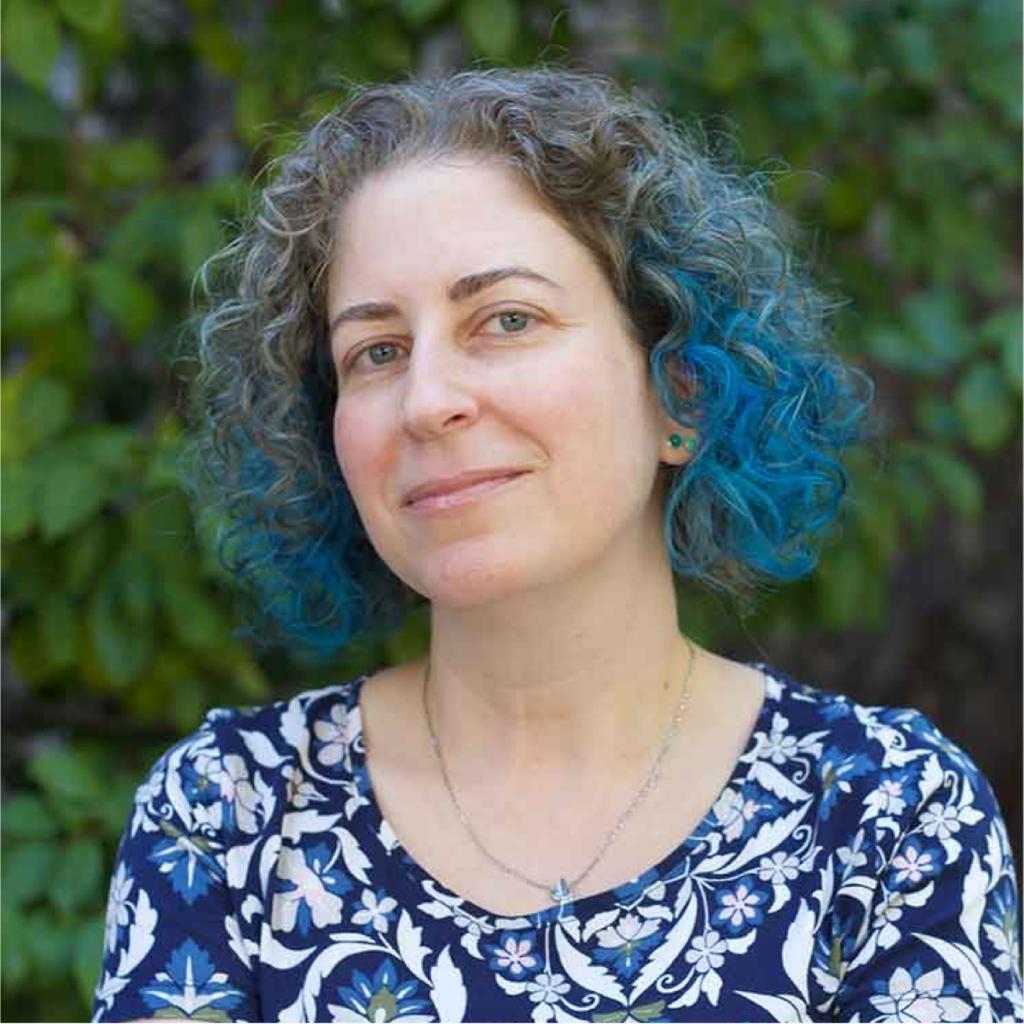
Dr. Lara Deeb, Scripps College
Professor of Anthropology
Laura Vausbinder Hockett Endowed Chair
Chair of Anthropology
Lebanon may be the most complicated place in the world to be a “mixed” couple. It has no civil marriage law, fifteen personal status laws, and a political system built on sectarianism. Still, Lebanon has the most interreligious marriages per capita in the Middle East. What constitutes a mixed marriage is in flux as social norms shift, and reactions to mixed marriage reveal underlying social categories of discrimination. Through stories of Lebanese couples, Love Across Difference challenges readers to rethink categories of difference and imagine possibilities for social change.
Drawing on two decades of interviews and research, Lara Deeb shows how mixed couples in Lebanon confront patriarchy, social difference, and sectarianism. In the drama that ensues as women and young men make their own marital choices, they push gender boundaries and reveal the ultimately empty nature of sect as a category of social difference. Love won’t end sectarianism, but it can contribute to reducing sect’s social power. Through the example of Lebanon, we can learn about our own social worlds, about the assumptions we make around social difference, and about how people react when forced to change their ideas of who can be made kin through marriage.
APRIL 14
Working Women in Jordan: Education, Migration, and Aspiration
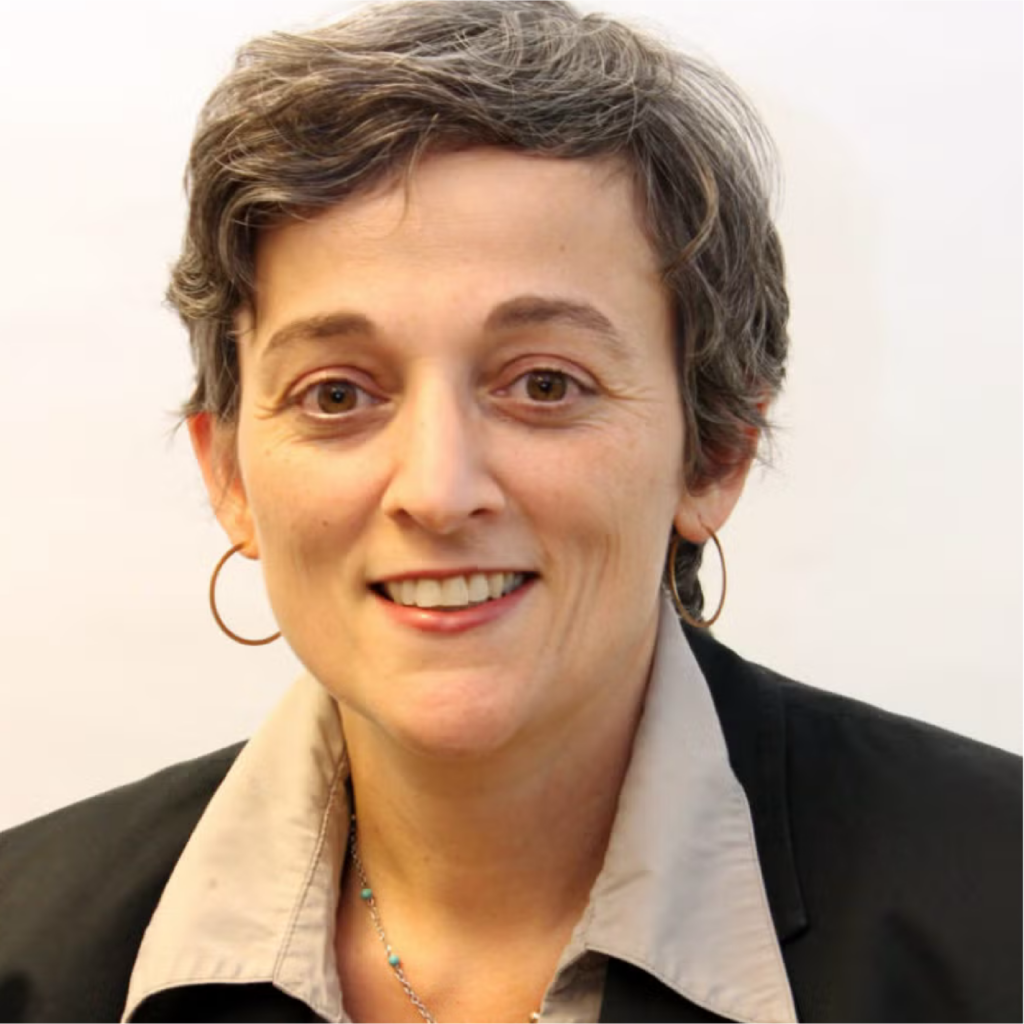
Dr. Fida Adely, Georgetown University
Associate Professor and Director, Center for Contemporary Arab Studies (CCAS)
Clovis and Hala Salaam Maksoud Chair in Arab Studies
A surprising look at the meaningful social changes in Jordan as lived and navigated by educated women.
Jordan has witnessed tremendous societal transformation in its relatively short history. Today it has one of the most highly educated populations in the region, and women have outnumbered and outperformed their male counterparts for more than a decade. Yet, despite their education and professional status, many women still struggle to build a secure future and a life befitting of their aspirations.
In Working Women in Jordan anthropologist Fida J. Adely turns to college-educated women in Jordan who migrate from rural provinces to Amman for employment opportunities. Building on twelve years of ethnographic research and extensive interviews with dozens of women, as well as some of their family members, Adely analyzes the effects of developments such as expanded educational opportunities, urbanization, privatization, and the restructuring of the labor market on women’s life trajectories, gender roles, the institution of marriage, and kinship relations. Through these rich narrative accounts and the analysis of broader socio-economic shifts, Adely explains how educational structures can act as both facilitators and obstacles to workforce entry—along with cascading consequences for family and social life. Deeply thorough and compelling, Working Women in Jordan asks readers to think more critically about what counts as development, and for whom.
APRIL 21
Water on Fire: A Memoir of War
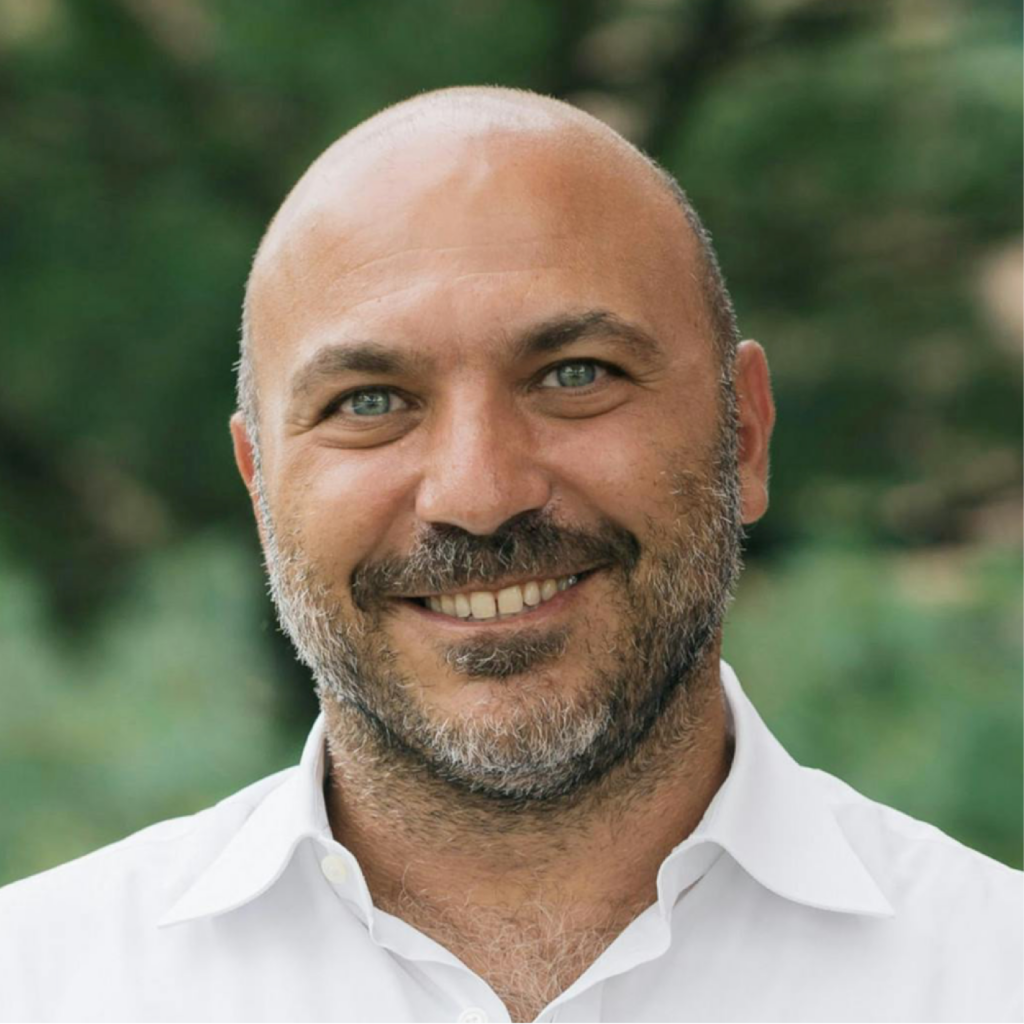
Dr. Tarek El-Ariss, Dartmouth College
Chair of Middle Eastern Studies Program
James Wright Professor at Dartmouth College
Professor of Middle Eastern Studies
Water on Fire tells a story of immigration that starts in a Beirut devastated by the Lebanese Civil War (1975–90), continues with experiences of displacement in Europe and Africa, moves to northeastern American towns battered by lake-effect snow and economic woes, and ends in New York City on 9/11. A story of loss, but also of evolution, it models a kind of resilience inflected with humor, daring, and irreverence.
Alternating between his perspective as a child and as an adult, Tarek El-Ariss explores how we live with trauma, poignantly illustrating the profound impact of war on our perception of the world, our fears and longings. His memoir is at once historical and universal, intellectual and introspective, the outcome of a long and painful process of excavation that reveals internal turmoil and the predicament of conflict and separation. A contemporary “interpretation of dreams” dealing with monsters, invisible creatures, skin outbreaks, and the sea, it is a book about objects and elements, like water and fire, and about how encountering these elements triggers associations, connecting present and past, time and space.