
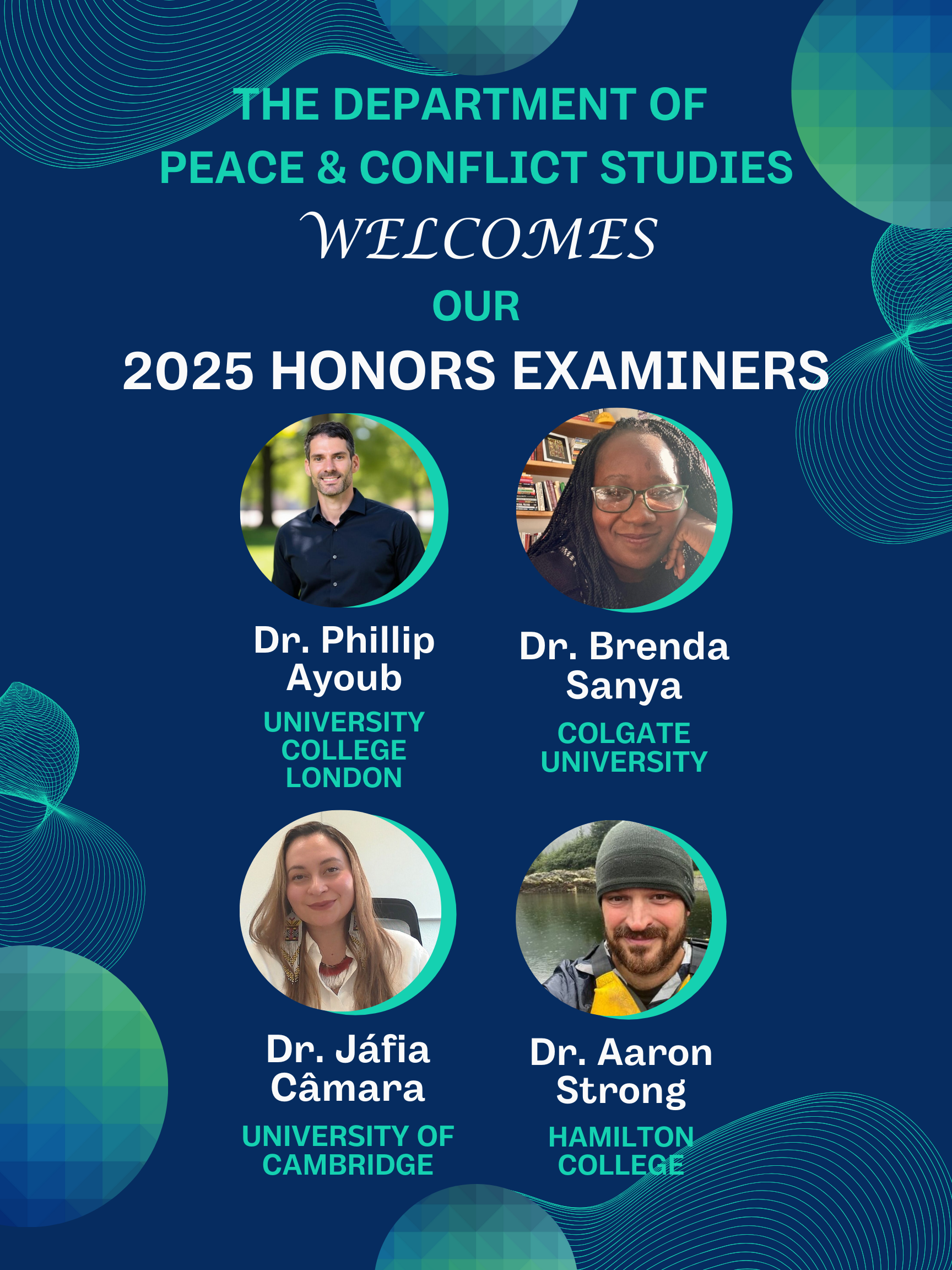
We’re delighted to welcome four exceptional academics as our 2025 PCS Honors Examiners. Their work draws from environmental science, political theory, critical pedagogy, and transnational scholarship to address dimensions of peace studies from climate governance and social justice to human rights advocacy and educational equity.
Dr. Phillip M. Ayoub
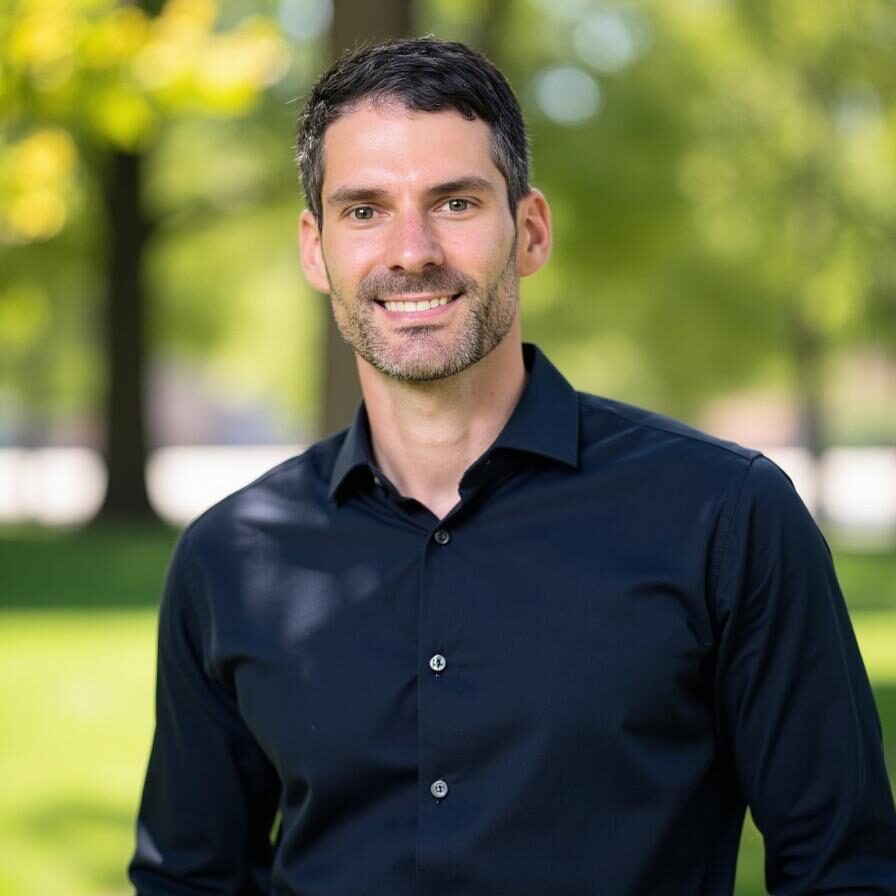
Dr. Phillip Ayoub is Professor in the Department of Political Science and the School of Public Policy at University College London, where he also serves as Editor of the European Journal of Politics & Gender. He earned his Ph.D. from the Department of Government at Cornell University in 2013, following a B.A. from the University of Washington and M.A. degrees from the University of North Carolina at Chapel Hill and Cornell University.
Ayoub’s research bridges international relations and comparative politics, with a focus on transnational politics, sexuality and gender, norm diffusion, and social movements. He is particularly interested in how transnational mobilization and international visibility shape socio-legal change across states. His first book, When States Come Out: Europe’s Sexual Minorities and the Politics of Visibility (Cambridge University Press, 2016), employs a mixed-methods approach to examine the domestic conditions facilitating the diffusion of international LGBT rights norms. His second book, The Global Fight Against LGBTI Rights: How Transnational Conservative Networks Target Sexual and Gender Minorities (coauthored with Kristina Stöckl, NYU Press, 2024), draws on a decade of fieldwork to analyze global anti-LGBTI movements and their interaction with LGBTI activism; it won a 2025 book award from the International Studies Association. His work has been published in leading journals across political science and sociology, and has been supported by numerous fellowships and grants, including from the Fulbright Program, the Alexander von Humboldt Foundation, and the European Research Council.
Dr. Jáfia Câmara
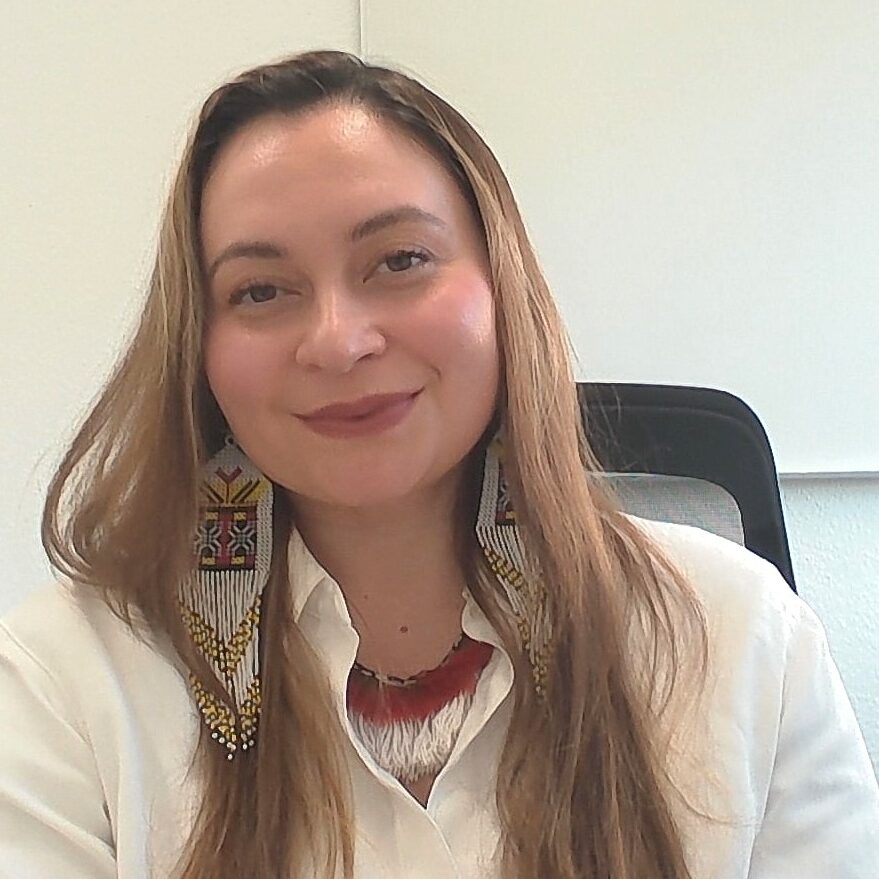
Dr. Jáfia Naftali Câmara is a British Academy Research Fellow at the Centre for Lebanese Studies and the University of Cambridge. Her work focuses on education and intersections of class, racism(s), border regimes, integration discourse and policy, and the coloniality of education at national and global levels. Other areas of interest include critical and anti-colonial perspectives, comparative research, knowledge production, education inequality, and research partnerships.
Dr. Brenda Sanya
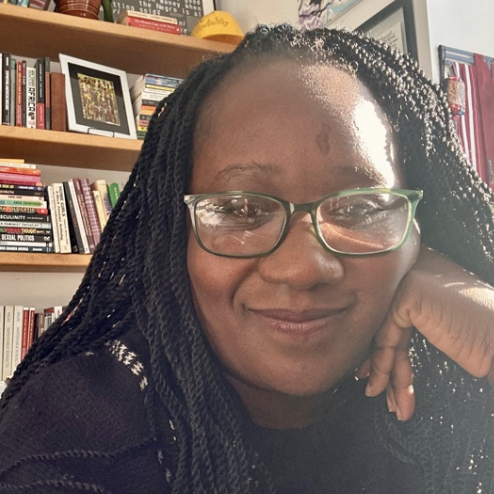
Dr. Brenda Nyandiko Sanya’s research focuses on transnational perspectives of
Blackness, the history of Black anti-imperial collaborations, and the influence of
education on the citizenship rights of African immigrants in the U.S. and rural women in
Kenya. Her current book project, States of Discretion: Black Migrating Bodies,
Racialization, and Naturalization in the United States, investigates the impact of
academic credentialing, geopolitical histories, and racialized immigration quotas on
African immigration. Her interdisciplinary work has been published in various edited
collections and peer-reviewed journals, including Curriculum Inquiry, Feminist Africa,
Gender and Education, and Policy Futures in Education. She has co-edited books such
as Spaces of New Colonialism (2020) and Safe Water, Sanitation and Early Childhood
Malnutrition in East Africa (2018). Her recent scholarship on Blackness, biopolitics, and
immigration appears in Ethnic and Racial Studies and the anthology African Immigrants
and the American Experience.
Dr. Sanya is an Associate Professor of Educational Studies at Colgate University, with
affiliations in Africana and Latin American Studies (ALST) and LGBTQ Studies. She
serves as the Coordinator of African American Studies within the ALST program and co-
director of the Graduate Student Access Fund. She holds an MA in Gender and Cultural
Studies from Simmons University and a PhD in Education Policy Studies from the
University of Illinois at Urbana-Champaign, where she was a fellow in the Cultures of
Law in Global Contexts program.
Dr. Aaron Strong
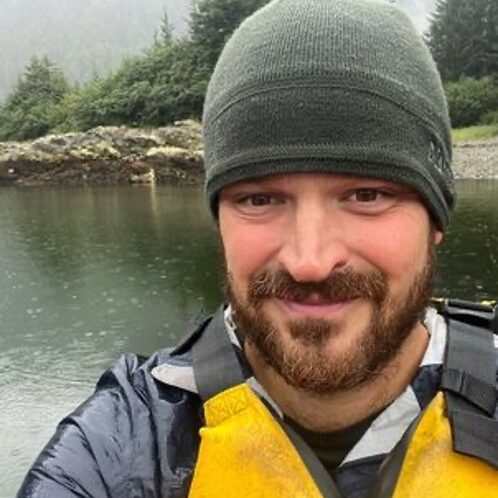
Dr. Aaron L. Strong’s research and teaching focus on understanding the human dimensions of the global climate crisis. Trained as a sustainability scientist, his work studies decision-making about managing climate change across governance scales, employing participatory scenario-based, spatially-explicit assessments that seek to enhance climate justice and provide actionable information to decision-makers. His research has been widely published in Proceedings of the National Academy of Sciences, Nature, Climate Policy, npj Climate Action, Environmental Research Letters and many other journals. His most recent NSF-funded research project focuses on rural community resistance to the renewable energy transition.
He is Associate Professor of Environmental Studies and Director of the Environmental Studies Program at Hamilton College, where he also serves as the Sustainability Program Director at the Levitt Center for Public Affairs. Before moving to Hamilton, Strong was previously faculty at the University of Maine, where he worked at the Climate Change Institute and the Mitchell Center for Sustainability Solutions. He received his PhD in Environment and Resources from Stanford University, his Masters from the Fletcher School at Tufts University, and his B.A. in Biology and Political Science from Swarthmore College.