

We are delighted to welcome six outstanding scholars, writers, and artists as our 2026 PCS Honors Examiners. Their work brings interdisciplinary perspective to vital questions of war and peace, justice and representation, environmental change, historical memory, and the social conditions that shape human flourishing.
George Abraham (they/هو)
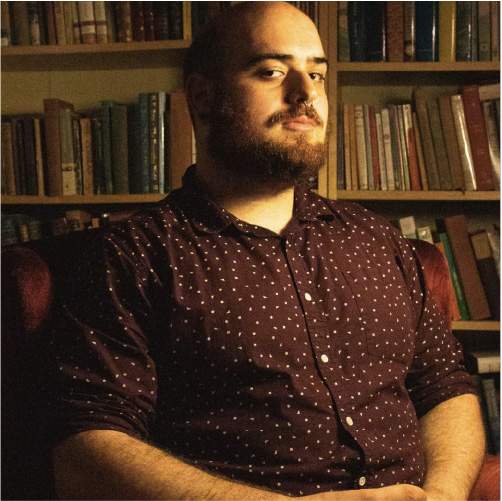
George Abraham (they/هو) is a Palestinian American poet, essayist, critic, and performance artist. They are the author of When the Arab Apocalypse Comes to America (Haymarket, 2026) and Birthright (Button Poetry, 2020), which won the Arab American Book Award and was a Lambda Literary Award finalist. They are the Editor-at-Large of Mizna and co-editor of HEAVEN LOOKS LIKE US: Palestinian Poetry (Haymarket, 2025), which was long-listed for the Palestine Book Award. A graduate of Northwestern’s Litowitz MFA+MA Program, they teach at Amherst College as Writer-in-Residence.
Dr. Randall Amster

Dr. Randall Amster, J.D., Ph.D., is Teaching Professor in The Earth Commons at Georgetown University, where he serves as Co-Director of the Environment & Sustainability degree program. He teaches and publishes on peace and nonviolence, social and environmental justice, political theory, and emerging technologies, with work appearing in a wide range of scholarly and public venues. His research interests include environmental peacebuilding, climate justice, community engagement, “digital food,” and ecotopian fiction. On campus, he works with initiatives including The Red House, the Prisons & Justice Initiative, and the Interdisciplinary Studies Major.
Dr. Omar Dewachi
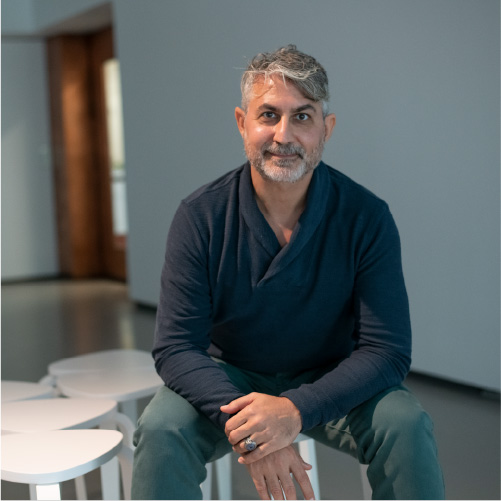
Dr. Omar Dewachi is Associate Professor of Anthropology and Chair of the Department of Anthropology at Rutgers University. Trained as both an anthropologist and a healthcare practitioner, his work examines the relationship between war, medicine, and society in Iraq and the broader Middle East. He is the author of Ungovernable Life: Mandatory Medicine and Statecraft in Iraq (Stanford University Press, 2017), and he is currently completing a forthcoming book, Death of the Clinic: Chronicles of War Biology, on the transformation of medical systems and biological life under prolonged conflict. His research spans anthropology, clinical medicine, global health, and the arts, and he also leads interdisciplinary research on antimicrobial resistance in conflict settings.
Dr. Matthew H. Ellis
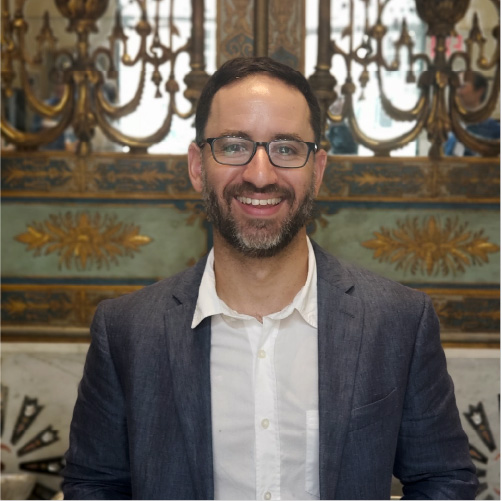
Dr. Matthew H. Ellis is a historian specializing in the social, intellectual, and cultural history of the modern Middle East and North Africa. He holds the Christian A. Johnson Endeavor Foundation Chair in International Affairs and Middle East Studies at Sarah Lawrence College, where he teaches courses on modern history and politics. He received his B.A. in History from Williams College, his M.Phil. in Modern Middle Eastern Studies from the University of Oxford, and his Ph.D. from Princeton University. His first book, Desert Borderland: The Making of Modern Egypt and Libya, was published by Stanford University Press in 2018.
Dr. Gil Z. Hochberg

Dr. Gil Z. Hochberg is Ransford Professor of Comparative Literature, Visual Studies, and Middle East Studies, and Chair of the Department of Middle Eastern, South Asian, and African Studies at Columbia University. Her work explores the relationship between politics and art across literature, cinema, video art, and photography, with particular attention to colonialism, orientalism, patriarchy, Palestine/Israel, and Zionism, alongside broader interests in (post)colonial Africa and the Middle East. She is the author of In Spite of Partition (2007), Visual Occupations (2015), Becoming Palestine (2021), and the forthcoming memoir My Father the Messiah (2026). She also serves on CCC’s editorial collective and Stanford’s Civilization Project.
Dr. Caroline Schaumann
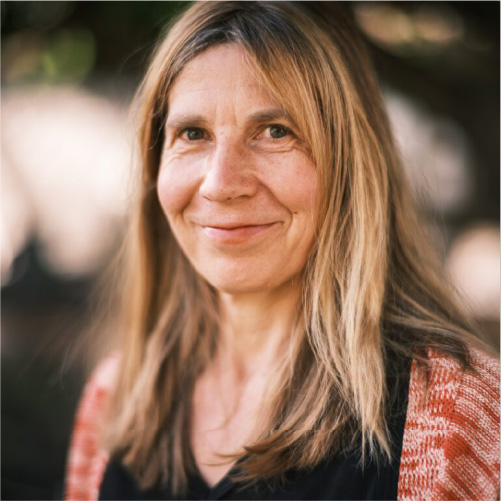
Dr. Caroline Schaumann is Professor of German Studies at Emory University and affiliated faculty in Jewish Studies, Film Studies, Environmental Sciences, and the Sustainability Minor. She is the author of Memory Matters: Generational Responses to Germany’s Nazi Past in Recent Women’s Literature (Walter De Gruyter, 2008), which examines contemporary German and German-Jewish literature in the aftermath of the Holocaust. Her current research focuses on ecocriticism, the environmental humanities, cultural histories of exploration and mountaineering, and the Anthropocene. Her second monograph, Peak Pursuits: The Emergence of Mountaineering in the Nineteenth Century (Yale University Press, 2020), explores culturally constructed notions of wilderness, masculinity, and national identity.